
Malting & Fermentation
The Cask & Beyond Whisky Dictionary · Issue 2 of 20


Malting & Fermentation
Before the still is ever lit, the whisky has already been shaped. Fermentation is where raw sugar becomes alcohol, where yeast makes a thousand tiny decisions about flavour, and where distilleries that look identical on paper can diverge completely in character. Most tours skip past the washbacks. This issue is the tour that stops there.
The Fermentation Question
There is a widespread assumption in whisky appreciation that flavour is created in the still and finished in the cask. Distillation gets the glamour. Maturation gets the mystique. Fermentation gets a paragraph in the distillery pamphlet and a brief look through a viewing window at some wooden vats.
This is a significant misreading of the process. Fermentation is where the majority of a whisky’s congener profile is established. The esters, fusel alcohols, aldehydes, and organic acids that define a distillery’s house character are overwhelmingly products of fermentation, not distillation. The still can concentrate and select from what fermentation has produced. It cannot create what was never there.
Understanding fermentation means understanding why Springbank tastes nothing like its Campbeltown neighbour Glengyle, despite using similar equipment and water sources. It means understanding why a 48-hour fermentation produces a different spirit than a 96-hour fermentation from the same mash. It means being able to read a distillery’s process notes with genuine comprehension rather than polite nodding.
This issue covers twenty terms across the full arc of fermentation: from the moment wort enters the washback to the moment low wines leave for the spirit still. Twenty entries. One spotlight on yeast strains. Everything you need to stop skipping this part of the tour.
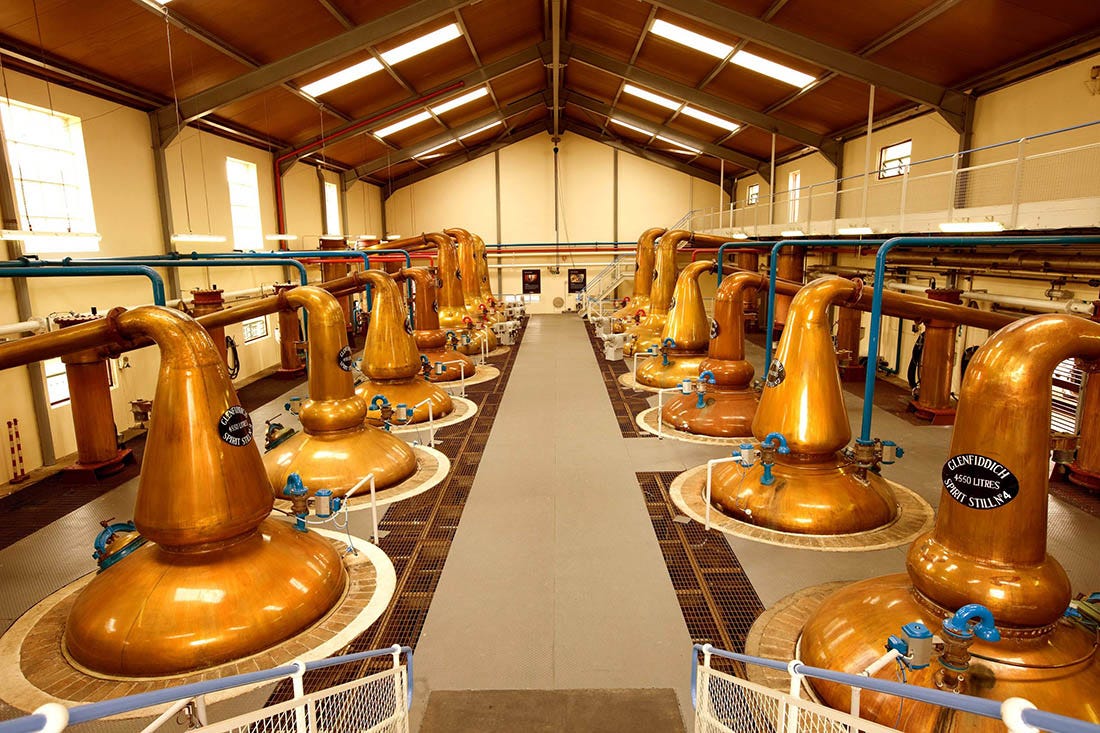
The Entries
Twenty terms across malting and fermentation, each in three layers: what it is, why it matters, what the process notes won’t always tell you.
Wash
Fermentation · End Product
Define: The beer-like liquid produced at the end of fermentation. Typically 6 to 9 percent alcohol by volume, the wash is the direct precursor to spirit and contains everything the distillation process will work with.
Context: The wash is essentially a crude, unhopped beer. It contains alcohol, water, residual unfermented sugars, esters, fusel alcohols, organic acids, and a range of other congeners produced by yeast during fermentation. Its composition at this stage is the single most important determinant of what the spirit will eventually taste like.
Nuance: The ABV of the wash matters to the distiller because it directly affects the volume of spirit produced per batch and the efficiency of the distillation run. Distilleries aim for consistency here. A wash that comes in at 7% ABV every time is more predictable to distil than one that varies between 6% and 9%, even if both are within acceptable parameters.
Washback
Fermentation · Vessel
Define: The large vessel in which wort is fermented by yeast to produce wash. Washbacks range in capacity from a few thousand litres at small craft distilleries to over 100,000 litres at large industrial operations.
Context: Traditional washbacks are made from Oregon pine, larch, or Douglas fir. They are difficult to sterilise completely and over time harbour populations of lactic acid bacteria in their wood grain that contribute to fermentation character. Stainless steel washbacks are the modern standard: easier to clean, more consistent, and cheaper to maintain. Most new distilleries opt for steel; many historic ones retain wood as a deliberate flavour choice.
Nuance: The debate about whether wooden washbacks contribute meaningfully to flavour beyond what yeast alone produces is genuine. Several distilleries have run side-by-side trials with wooden and steel washbacks using identical wort and yeast. Results have been inconsistent enough that no definitive answer exists. What is not disputed is that the bacteria present in wooden vessels do influence fermentation, particularly in longer ferments where bacterial activity becomes significant.
Yeast
Fermentation · Organism
Define: Single-celled fungi of the genus Saccharomyces that convert fermentable sugars into ethanol and carbon dioxide through anaerobic metabolism. The essential biological engine of fermentation.
Context: Distilling yeast differs from baking or brewing yeast in being selected for high alcohol tolerance, efficient sugar conversion, and specific congener production. Most Scottish distilleries use dried distiller’s yeast supplied by a small number of specialist producers. Some also add brewer’s yeast to their pitching blend, which tends to extend fermentation time and increase ester production at the cost of slightly lower alcohol yield.
Nuance: Yeast produces not just ethanol but hundreds of flavour-active compounds as metabolic by-products. These include esters (fruity), fusel alcohols (oily, solvent-like at high concentrations), aldehydes (green, grassy), diacetyl (buttery), and organic acids. The specific balance of these compounds is determined by yeast strain, fermentation temperature, pitch rate, and fermentation duration. Two distilleries using the same malt and the same equipment will produce different spirits if they use different yeast strains.
Pitching
Fermentation · Process
Define: The act of adding yeast to cooled wort in the washback to initiate fermentation. The rate at which yeast is added (the pitch rate) directly affects fermentation speed, efficiency, and flavour profile.
Context: Wort must be cooled before pitching because yeast is killed at temperatures above approximately 40 degrees Celsius. Most distilleries pitch at 18 to 22 degrees Celsius. A high pitch rate accelerates fermentation and produces a cleaner, more efficient conversion of sugar to alcohol. A lower pitch rate gives the yeast more to do per cell, stressing it mildly and encouraging production of more complex flavour compounds.
Nuance: Pitch rate is one of the less-discussed variables in distillery process notes, but it is a real lever. Distilleries that deliberately under-pitch are making a flavour decision as much as an operational one, accepting lower predictability in exchange for more character. This is relatively uncommon in large commercial operations, which prioritise consistency, but more frequently observed in craft distilleries where the product brief calls for complexity.
Fermentation
Process · Core Stage
Define: The biochemical process by which yeast converts fermentable sugars in the wort into ethanol, carbon dioxide, and a range of flavour-active congeners. In whisky production, fermentation typically lasts between 48 and 120 hours.
Context: Fermentation proceeds in two broad phases. The primary phase is dominated by Saccharomyces yeast working aerobically, then anaerobically, converting glucose and maltose into alcohol. After the yeast population has exhausted most of its available sugar and begins to die back, a secondary bacterial phase can occur in which lactic acid bacteria produce additional flavour compounds, particularly fruity and dairy-adjacent esters.
Nuance: The carbon dioxide produced during active fermentation is visible as a foam on the surface of the washback, sometimes rising vigorously enough to require a rotating wooden switcher arm to prevent overflow. This is the stage distillery visitors most frequently see through viewing windows. What they are observing is not simply “the ferment” but the primary yeast phase at its most active, typically 12 to 36 hours into a 72-hour or longer run.
Fermentation Time
Fermentation · Variable
Define: The total duration of fermentation from pitching to transfer to the wash charger. One of the most significant controllable variables in whisky flavour production.
Context: Short fermentations of 48 to 55 hours favour high alcohol yield and produce a spirit with more cereal, sulphurous, and meaty characteristics. Long fermentations of 70 to 120 hours allow bacterial activity to develop, producing more esters and fruity compounds at the cost of slightly lower alcohol yield. The difference between a 55-hour and a 110-hour ferment from the same wort and yeast is clearly perceptible in the resulting new make spirit.
Nuance: Fermentation time is operationally constrained by washback capacity and distillation throughput. A distillery with six washbacks and two wash stills must balance these against each other. Distilleries that want to run long ferments sometimes need more washbacks than their distillation rate would strictly require, purely to allow the time. Glenfiddich runs relatively short ferments by industry standards; Springbank and Daftmill are known for their longer ones.
Esters
Chemistry · Flavour
Define: Organic compounds formed during fermentation and maturation through the reaction of alcohols with organic acids. Esters are the primary source of fruity character in whisky: ethyl acetate smells of pear drops, ethyl hexanoate of green apple, isoamyl acetate of banana.
Context: Ester production during fermentation is driven primarily by yeast strain, fermentation temperature, and fermentation duration. Higher temperatures and longer ferments generally produce more esters. The specific ester profile depends heavily on which organic acids are available for reaction with which alcohols, which in turn depends on the yeast’s metabolic activity and the composition of the wort.
Nuance: Esters continue to form during maturation as well, through slow chemical reactions between residual alcohols and acids in the maturing spirit. Oak also contributes some ester-type compounds through its own chemistry. This is why a light, clean new make can develop surprising fruity complexity over 10 or 12 years in a good cask: the ester chemistry was not complete at distillation. It was still in progress.
Fusel Alcohols
Chemistry · Flavour
Define: Higher alcohols produced by yeast during fermentation as by-products of amino acid metabolism. At high concentrations they are harsh and solvent-like; at low concentrations they contribute complexity and body to spirit.
Context: The most common fusel alcohols in whisky are isoamyl alcohol (banana, nail varnish), propanol (alcoholic sharpness), and isobutanol (bitter, wine-like). They are present in all fermented spirits and are not inherently undesirable. The distiller’s art partly consists in managing fusel alcohol concentration through cut selection, distillation style, and cask maturation, which partially oxidises them into more pleasant compounds over time.
Nuance: The word “fusel” comes from the German for “bad liquor.” Their historical association with rough, poorly made spirit comes from the era of short ferments, imprecise distillation, and no maturation, when fusel alcohols had no time to mellow. In a well-made whisky after ten years in oak, the same compounds contribute the oiliness and weight that tasters often describe as “mouthfeel” or “texture.” Context and time transform the perception completely.
Congeners
Chemistry · Collective Term
Define: The collective term for all flavour-active chemical compounds in a spirit other than ethanol and water. Congeners include esters, fusel alcohols, aldehydes, organic acids, phenols, and hundreds of other trace compounds produced during fermentation and maturation.
Context: A mature Scotch whisky contains between 300 and 600 identifiable congener compounds, most at concentrations measured in parts per million or less. The interaction between these compounds at such low concentrations is where the complexity of whisky flavour lives. No single compound “is” the taste of a whisky; it is the ratio and interaction of many compounds that creates the holistic sensory experience.
Nuance: Congeners are also the subject of ongoing debate in the science of hangovers. The theory that drinks high in congeners cause worse hangovers than pure ethanol has some basis in evidence, though the picture is complicated by individual variation, total ethanol consumed, and the rate of drinking. Bourbon is typically higher in congeners than vodka. Whether it causes worse hangovers than vodka consumed in equivalent quantities is a question the evidence has not yet cleanly resolved.
Lactic Acid Bacteria
Fermentation · Microbiology
Define: Bacteria, primarily of the Lactobacillus genus, that naturally occur in the distillery environment and can become active during longer fermentations, particularly in wooden washbacks. They produce lactic acid and additional esters as metabolic by-products.
Context: LAB activity is most significant in the second half of a long fermentation, after the primary yeast phase has slowed. The lactic acid they produce can react with alcohols to form lactate esters, which contribute creamy, dairy-adjacent notes. Some of the more complex, layered new make spirits from distilleries running long ferments in wooden washbacks owe a significant part of their character to bacterial co-fermentation rather than yeast alone.
Nuance: Whether LAB activity is a deliberate production choice or simply an accepted consequence of using wooden washbacks is distillery-dependent. Some actively manage bacterial populations through cleaning regimens that reduce but do not eliminate them. Others allow them to develop freely. Craft distilleries exploring “natural” or “wild” fermentation are deliberately inviting more diverse microbial communities, including but not limited to LAB, in pursuit of flavour complexity that pure yeast fermentation cannot achieve.
Attenuation
Fermentation · Efficiency
Define: The degree to which yeast has consumed available fermentable sugars in the wort. Full attenuation means the yeast has worked through all accessible sugar; under-attenuation means residual sugars remain.
Context: Distillers measure attenuation using a hydrometer or refractometer, tracking the drop in specific gravity from wort to finished wash. A typical wort might start at 1.060 specific gravity and finish at 1.000 or below, indicating that most fermentable sugars have been converted. Under-attenuation can result from yeast stress, temperature problems, or insufficient fermentation time, and typically reduces spirit yield per batch.
Nuance: Unlike brewers, who sometimes deliberately leave residual sweetness in beer through under-attenuation, distillers rarely want this. Any residual sugar that passes into the still is wasted yield. The exception is in some craft operations experimenting with very short ferments, where partial attenuation is used deliberately to carry cereal sweetness further into the spirit character. The results are distinctive; whether they are desirable is a matter of taste.
Switcher
Equipment · Washback
Define: A rotating wooden or stainless steel arm fitted above the washback that cuts through the foam produced during active fermentation, preventing overflow. Also called a rummager in some distilleries.
Context: During peak fermentation, carbon dioxide production is rapid enough to create a thick, rising foam that can overflow a washback if unchecked. The switcher breaks this foam mechanically. In older distilleries, the switcher was driven by a water wheel or hand-cranked. Modern versions are electrically driven and can be set to operate on timers during the most active fermentation phases.
Nuance: The switcher is one of the more visually dramatic pieces of distillery equipment when it is operating, which is why distillery tours tend to time visits to the washback room during active fermentation. What visitors are watching is the switcher managing carbon dioxide release, not the fermentation itself, which is happening invisibly in the liquid below. The real action is microbial, not mechanical.
Pot Ale
By-product · Sustainability
Define: The liquid remaining in the wash still after the first distillation run. Also called burnt ale or spent wash. Acidic, protein-rich, and containing unfermentable sugars and yeast residues.
Context: Pot ale is a significant by-product of every malt whisky distillery. Historically it was disposed of as effluent, which caused serious water pollution problems downstream. Modern distilleries process pot ale into pot ale syrup by evaporation, which is then combined with draff to produce dark grains, a high-protein animal feed. Some distilleries use pot ale as a nutrient supplement in anaerobic digestion systems for biogas production.
Nuance: The pot ale from a well-fermented wash is nutritionally rich enough to be genuinely valuable as animal feed. The circular economy argument for distillery by-products is not simply environmental marketing: the relationship between Scotch distilleries and Scottish livestock farming has been practically and economically significant for over two centuries. The feed pellets produced from pot ale and draff are used across Scottish agriculture at meaningful scale.
Open vs. Closed Fermentation
Fermentation · Design
Define: Open fermentation takes place in uncovered washbacks, exposing the fermenting wort to the ambient air of the distillery. Closed fermentation uses sealed or covered vessels that contain carbon dioxide and prevent ambient air contact.
Context: Open fermentation allows wild yeasts and bacteria naturally present in the distillery environment to contribute to fermentation alongside the pitched yeast. This can add complexity and site-specific character but also introduces variability. Closed fermentation is more hygienic, more consistent, and allows carbon dioxide to be captured for other uses. The majority of large Scotch distilleries use covered washbacks; some craft producers prefer open vessels for their unpredictability.
Nuance: The concept of a distillery developing its own microbial terroir through open fermentation is compelling, and there is some evidence for it. Distilleries that have used the same wooden open washbacks for decades do appear to harbour consistent resident yeast and bacterial populations. Whether this contributes a genuinely detectable and consistent flavour is harder to demonstrate, because isolating the microbial contribution from all other variables in a working distillery is extremely difficult.
House Yeast
Fermentation · Identity
Define: A proprietary yeast strain maintained and used exclusively by a single distillery. House yeasts are typically the result of years of selection, either from a commercial strain that has been propagated in-house or from a naturally occurring strain isolated from the local environment.
Context: Most Scottish distilleries use commercially available dried distiller’s yeast rather than a maintained house strain. The economics of yeast propagation make it impractical for all but the largest operations. The notable exceptions tend to be historic distilleries that began maintaining their own strains before dried yeast was widely available, or craft producers explicitly positioning provenance as a central part of their brand.
Nuance: The potential flavour difference between a house yeast and a commercial strain is real but difficult to quantify in a production context. Waterford Distillery in Ireland has done some of the most systematic published work on yeast contribution to distillate character, isolating yeast as a variable while holding other factors constant. Their early results suggest yeast strain accounts for a measurable but modest proportion of new make flavour complexity, on a similar order of magnitude to grain variety.
Low Wines
Distillation · First Run
Define: The distillate produced by the first pass of wash through the wash still. Typically 20 to 28 percent ABV, low wines are not yet whisky but the intermediate spirit that will be redistilled in the spirit still.
Context: The wash still performs a relatively crude separation, concentrating alcohol from the roughly 8% ABV wash to a more manageable 20 to 28%. The resulting low wines still contain most of the congeners, including fusel alcohols and heavier esters, that will be refined and selected during the second distillation. Think of the wash still as doing the heavy lifting; the spirit still does the fine work.
Nuance: Some distilleries use a third distillation before collecting spirit, which further refines the low wines. Irish whiskey is the most famous practitioner of triple distillation, which produces a lighter, cleaner spirit by removing more of the heavier congeners at each pass. Auchentoshan in Scotland also triple-distils. The trade-off is that each additional distillation removes not just undesirable compounds but also some of the complexity that single and double distillation preserve.
Specific Gravity
Measurement · Fermentation
Define: A measure of the density of a liquid relative to water. In fermentation, tracking the fall in specific gravity from wort to wash allows distillers to monitor fermentation progress and calculate the alcohol content of the resulting wash.
Context: Wort typically has a specific gravity of 1.050 to 1.070 depending on the sugar concentration. As yeast converts sugars to alcohol and carbon dioxide, the density drops. Alcohol is less dense than water, so a fully fermented wash has a specific gravity at or slightly below 1.000. The difference between original and final gravity is used to calculate the approximate alcohol yield.
Nuance: Modern distilleries increasingly use continuous inline sensors to monitor fermentation progress in real time rather than taking periodic manual hydrometer readings. This allows earlier detection of stuck fermentations, where yeast activity has stopped prematurely due to stress, temperature fluctuation, or nutrient depletion. Catching a stuck ferment early can save a washback from total loss. Catching it late typically cannot.
Stuck Fermentation
Fermentation · Problem
Define: A fermentation in which yeast activity has stopped prematurely before all fermentable sugars have been converted to alcohol. The resulting wash has lower ABV than expected and higher residual sugar.
Context: Stuck fermentations are caused by yeast stress, most commonly from excessive temperature (above 35 degrees Celsius), alcohol toxicity (when ABV rises faster than the yeast can adapt), nutrient depletion, or contamination with inhibitory compounds. The result is a wash that cannot be distilled efficiently and may require remedial treatment or, in severe cases, disposal.
Nuance: The most common cause of stuck fermentations in Scottish distilleries is temperature management during summer months, when ambient temperatures in the distillery building can push washback temperatures above the yeast’s tolerance threshold. Distilleries in warmer climates face this challenge constantly. Some Taiwanese and Indian distilleries have had to redesign their entire fermentation process around active cooling, because the fermentation patterns developed in Scotland simply do not transfer to a climate where ambient temperatures regularly exceed 30 degrees Celsius.
Carbon Dioxide
Fermentation · By-product
Define: The gas produced alongside ethanol during yeast fermentation of sugars. Each molecule of glucose fermented produces two molecules each of ethanol and carbon dioxide.
Context: Carbon dioxide production during active fermentation is vigorous enough to create a dangerous atmosphere in the washback room if ventilation is poor. CO2 is denser than air and accumulates at low levels. Distillery workers are trained not to lean into open washbacks during active fermentation, and washback rooms in historic distilleries are fitted with ventilation systems that were often retrofitted only after accidents.
Nuance: A small number of distilleries now capture the carbon dioxide produced during fermentation for commercial sale or for use in carbonating beverages. This adds a small revenue stream and reduces the distillery’s overall carbon footprint slightly. Given that fermentation CO2 is biogenic rather than fossil-derived, its climate accounting is different from combustion emissions, but the energy cost of capture and compression is not trivial.
New Make Spirit
Distillation · Output
Define: The clear, unaged spirit that flows from the spirit still after the distiller has made their cuts. Also called plain malt, white dog (in the US), or new make. It is the direct product of fermentation and distillation, before any cask contact.
Context: New make spirit is the truest expression of a distillery’s fermentation and distillation character, unmediated by oak. Tasting new make is one of the most informative things an enthusiast can do, because it isolates the contribution of everything that happens before the cask. Distilleries that produce new make with strong, clean fruit are typically running long fermentations. Those with cereal, meaty, or sulphurous new make are usually running shorter ferments or taking tighter cuts.
Nuance: New make is legally available for sale in Scotland as a spirit, though it cannot be called whisky. Several distilleries sell their new make directly or through specialist retailers as a way of offering enthusiasts transparency into their process. Bruichladdich, Kilchoman, and Springbank have all released new make at various points. For the serious enthusiast, tasting a distillery’s new make and then tasting a 10-year expression from the same distillery is one of the most instructive whisky exercises available.
Spotlight: The Yeast Question
Why two distilleries can use identical malt, identical water, and identical stills and still produce completely different spirits
Yeast does not merely convert sugar to alcohol. It authors the flavour of every spirit it touches. Distillation edits. Maturation refines. But yeast writes the first draft.
Ask most whisky drinkers what makes Speyside malts typically lighter and fruitier than Islay malts and they will say: peat, water, the sea air. These are not wrong answers, but they are incomplete ones. A significant part of what makes Glenfiddich taste like Glenfiddich and not Laphroaig is not geography at all. It is yeast, fermentation time, and washback character. It is a biological process invisible to the distillery visitor and largely absent from the marketing literature.
Yeast is a metabolically complex organism. Saccharomyces cerevisiae, the primary species used in distilling, produces ethanol as its main metabolic product but it generates hundreds of other compounds in smaller quantities as it works. The specific mix of these compounds is not fixed: it changes with temperature, with the sugar composition of the wort, with the concentration of nutrients available, with the presence or absence of competing microorganisms, and with the strain of yeast itself.
Fermentation temperature is one of the most direct levers. At lower temperatures (15 to 18 degrees Celsius), yeast works more slowly and produces a higher proportion of fruity esters relative to fusel alcohols. At higher temperatures (25 to 35 degrees Celsius), it works faster, produces more fusel alcohols, and generates a spirit with more weight and body but less delicate fruit. Most Scottish distilleries operate in the 18 to 25 degree range, but the specific temperature profile across the fermentation run varies considerably and is closely guarded.
Fermentation duration has an equally significant effect. In the first 50 or so hours of a standard ferment, yeast activity dominates and the primary products are ethanol, carbon dioxide, and a moderate ester load. As the yeast population reaches its peak and begins to decline, bacterial populations that were present but suppressed begin to grow. Lactic acid bacteria and other organisms produce additional organic acids, which then react with the alcohols already present to form new and different esters. A 48-hour ferment largely misses this second phase. A 96-hour ferment captures it entirely. The resulting spirits can be dramatically different.
The practical implication for the enthusiast is to pay attention to the fermentation details that some distilleries do disclose: fermentation time in hours, washback material, and yeast strain where stated. These are not decorative facts. They are architectural decisions that explain why the glass in your hand tastes the way it does. When a distillery tells you they ferment for 110 hours in Oregon pine washbacks with a mixed yeast and brewer’s yeast blend, they are describing a deliberate choice to maximise ester complexity at the expense of yield efficiency. That choice is in the bottle.
See also: Issue 1 covered the malting and grain decisions that determine what the yeast has to work with.
Next issue: The wash is in the still. Now comes the part most people think they understand and almost nobody does fully. Issue 3 covers distillation in full: still shape, reflux, the science of cuts, and why the spirit safe is the most consequential piece of equipment in any distillery.
Issue 3: Distillation
The Cask & Beyond Whisky Dictionary · Issue I · Grain & Raw Materials
The Cask & Beyond Whisky Dictionary · Issue 2 · Malting & Fermentation